Shopify • Lead Designer • 2023
Unlocking a new growth lever
As the Lead Designer, I spearheaded the end-to-end execution of Shopify’s Merchant Referral Program. I drove the design lifecycle from the initial MVP launch in the US and UK through to the global full-feature release, simultaneously conceptualizing the north-star incentive strategy and delivering the final production-ready interface.
Listen to case study
Loading case study audio...

Problem
The expenses associated with acquiring users through paid ads are excessively high, without necessarily yielding the highest quality leads. The payback period for paid ads is prolonged and frequently fails to achieve a successful return on investment, ultimately leading to a net loss for the company.
Proposal
Develop and implement an innovative growth strategy for Shopify that reduces dependence on costly paid advertisements and instead utilizes existing research data on user sign-ups, particularly through referrals. The primary objective is to create avenues to engage and activate users within the Shopify ecosystem by incorporating incentive mechanisms.
Impact & outcomes
By operationalizing word-of-mouth, we achieved immediate improvements in acquisition costs and cross-team alignment.
Payback efficiency
+63%
More efficient payback period for user acquisitions, from eight months down to three months.
New users
+200k
Estimated number of incremental new users brought in by full feature rollout.

Activating a new growth lever
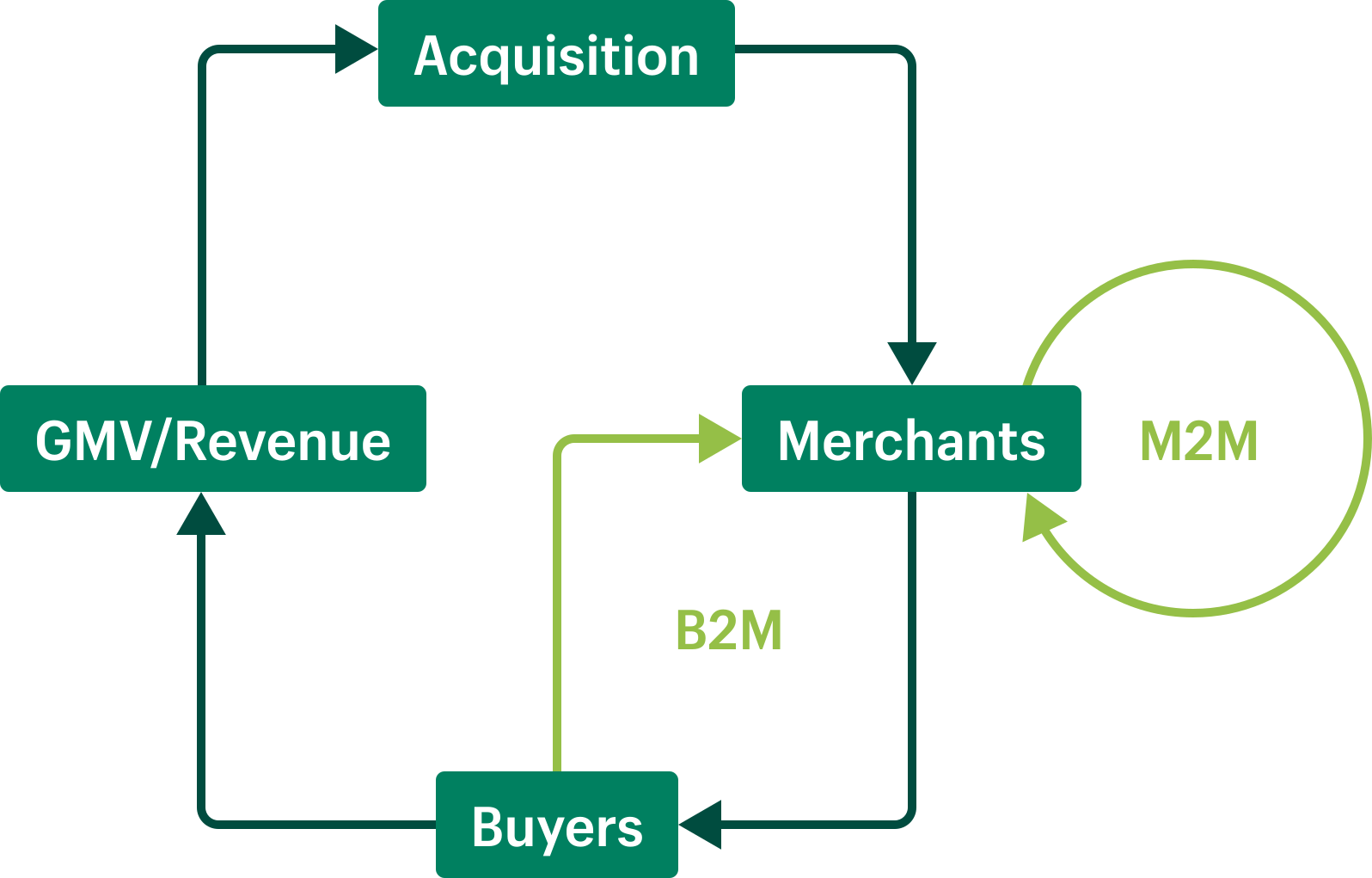
The aim of the Shopify merchant referral program is to leverage an existing referral user behavior and activate a new growth channel for Shopify. Our research showed that organic referrals already accounted for around 29% of new merchant signups, with 59% of existing merchants referring others. By optimizing this behavior through a double-sided referral program integrated into the product, we estimated that it would bring in approximately 50,000 new leads in the first year, for less than half the cost of paid acquisition per lead.
Referrers and referees
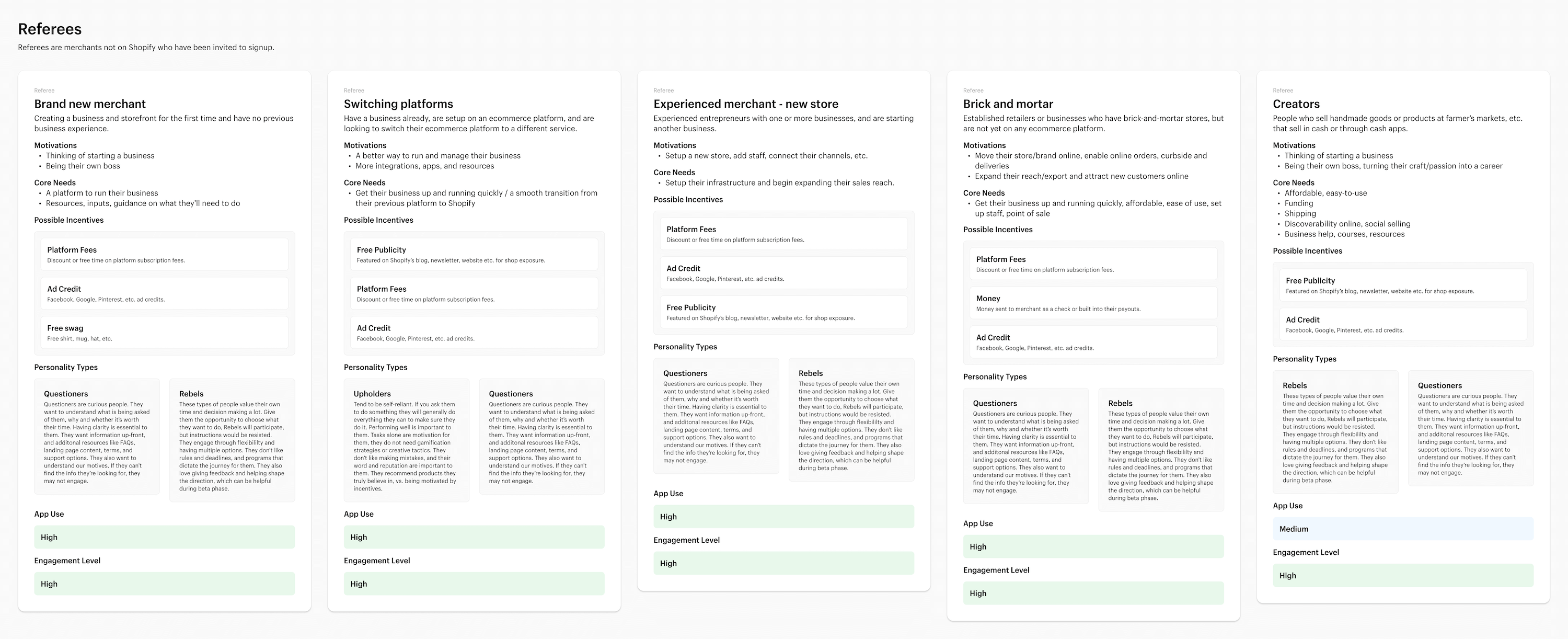
By considering the likely users of the referral program, we gained valuable insights that guided our product thinking. We focused on the primary user groups in Shopify's admin, identified from preexisting research and reasonable assumptions. These user personas were defined by factors such as their motivations, personality types, core needs, app use, engagement level, and percentage of Shopify's user base. From there, we categorized them into two groups: referrers and referees. The program initially targeted existing Shopify users (referrers) who would invite new users (referees) to participate.
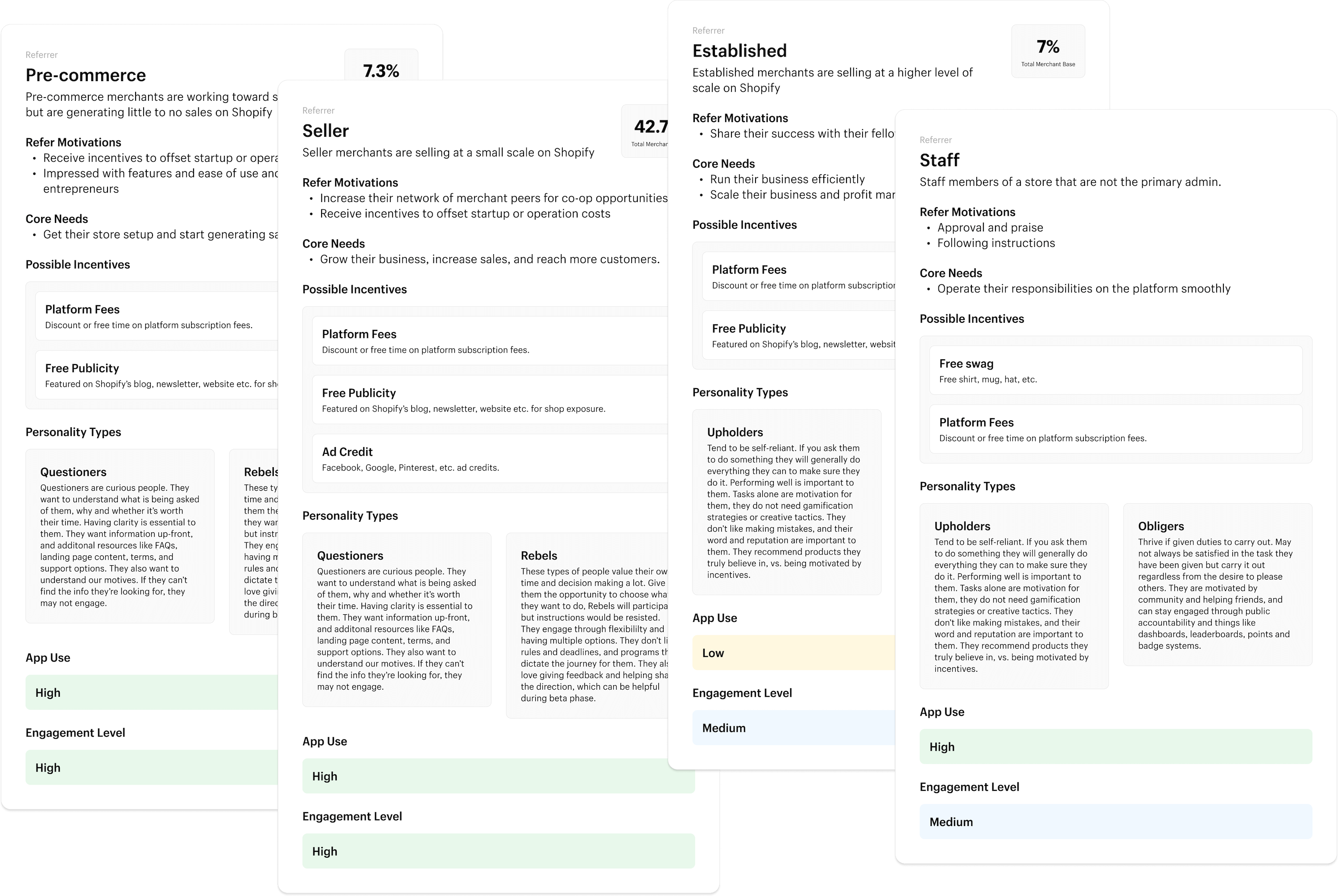
Our findings suggest that referees have the potential to be the most effective referrers due to their high level of user engagement and already being familiar with, and understanding the value of the referral program.
29% of all merchants were referred to Shopify, and 59% claim to have recommended others.

Experimentation
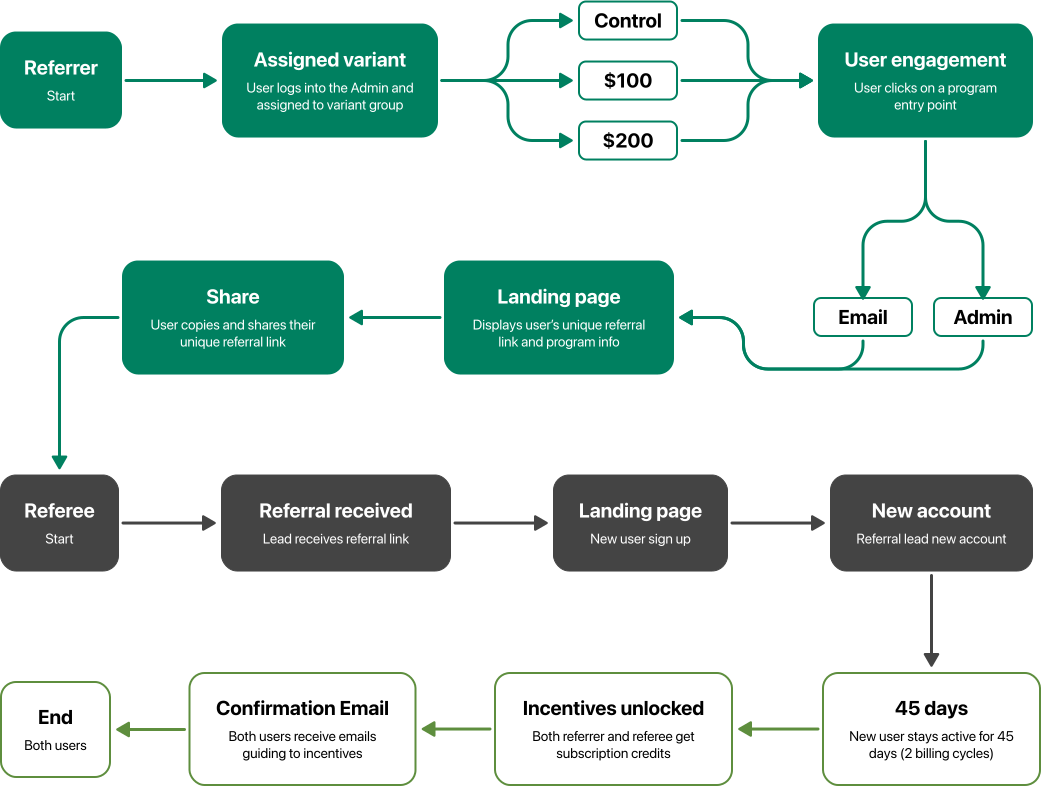
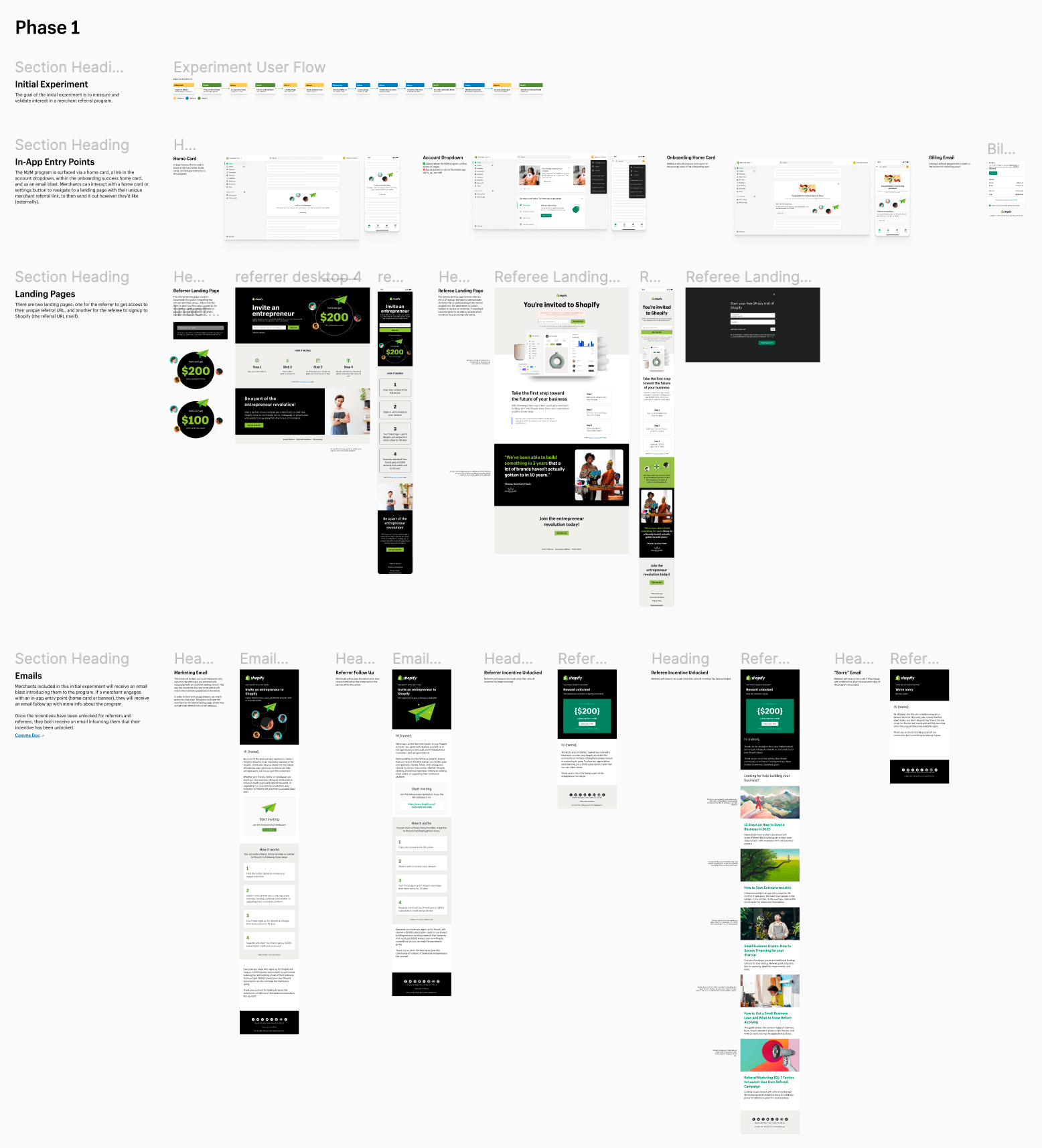
The objective of phase 1 was to validate the investment into a full backend infrastructure and product with minimal development resources. The experiment ran for approximately 7 weeks in the US and UK for all users, where they were assigned a variant (control, variant A, or variant B) upon logging into their admin. The data collected from this experiment validated the program's interest, determined the entry points with the highest engagement, identified where and how referral links were shared, established expected payouts, and provided some preliminary validation on user personas.
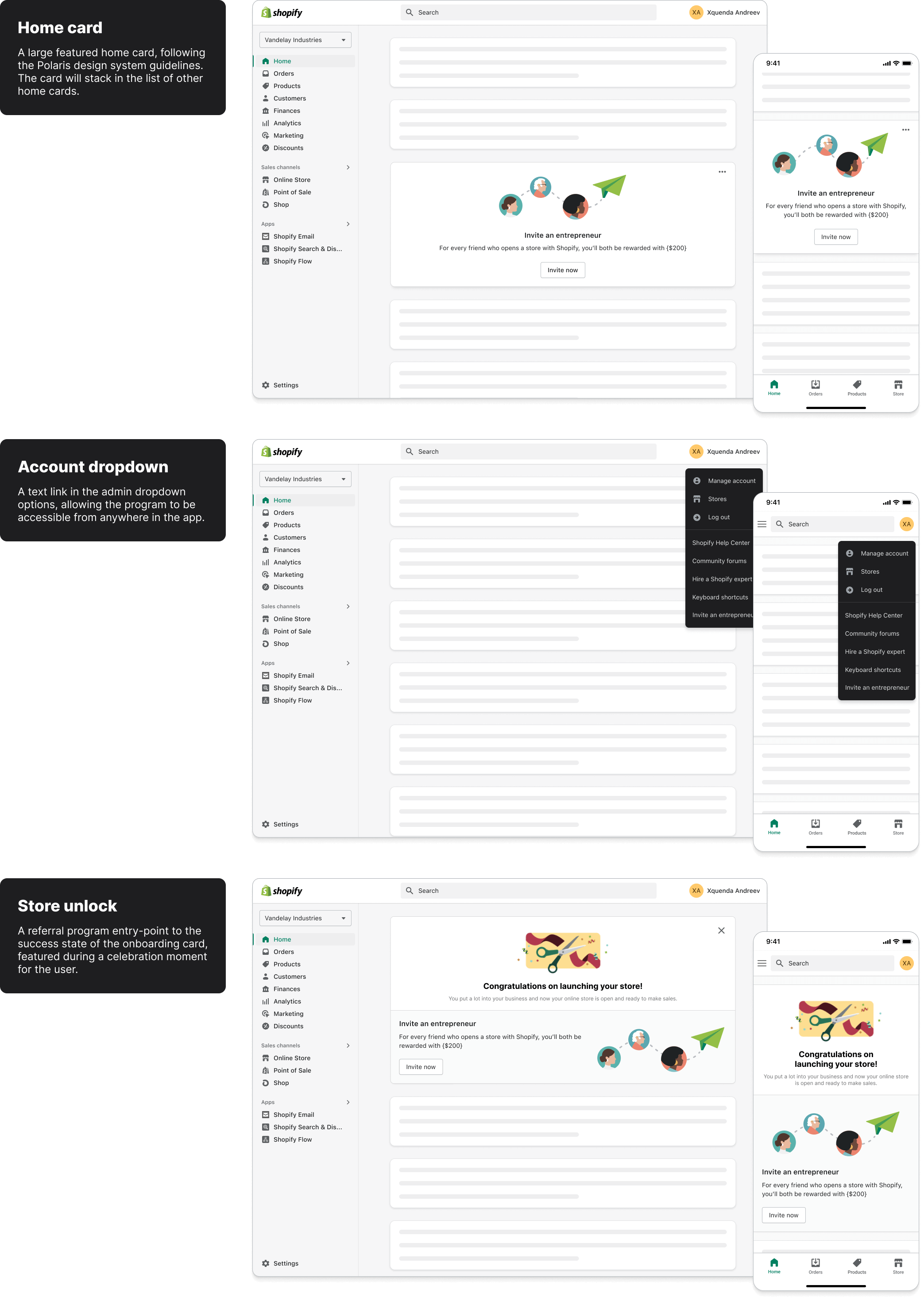
Initial admin entry points
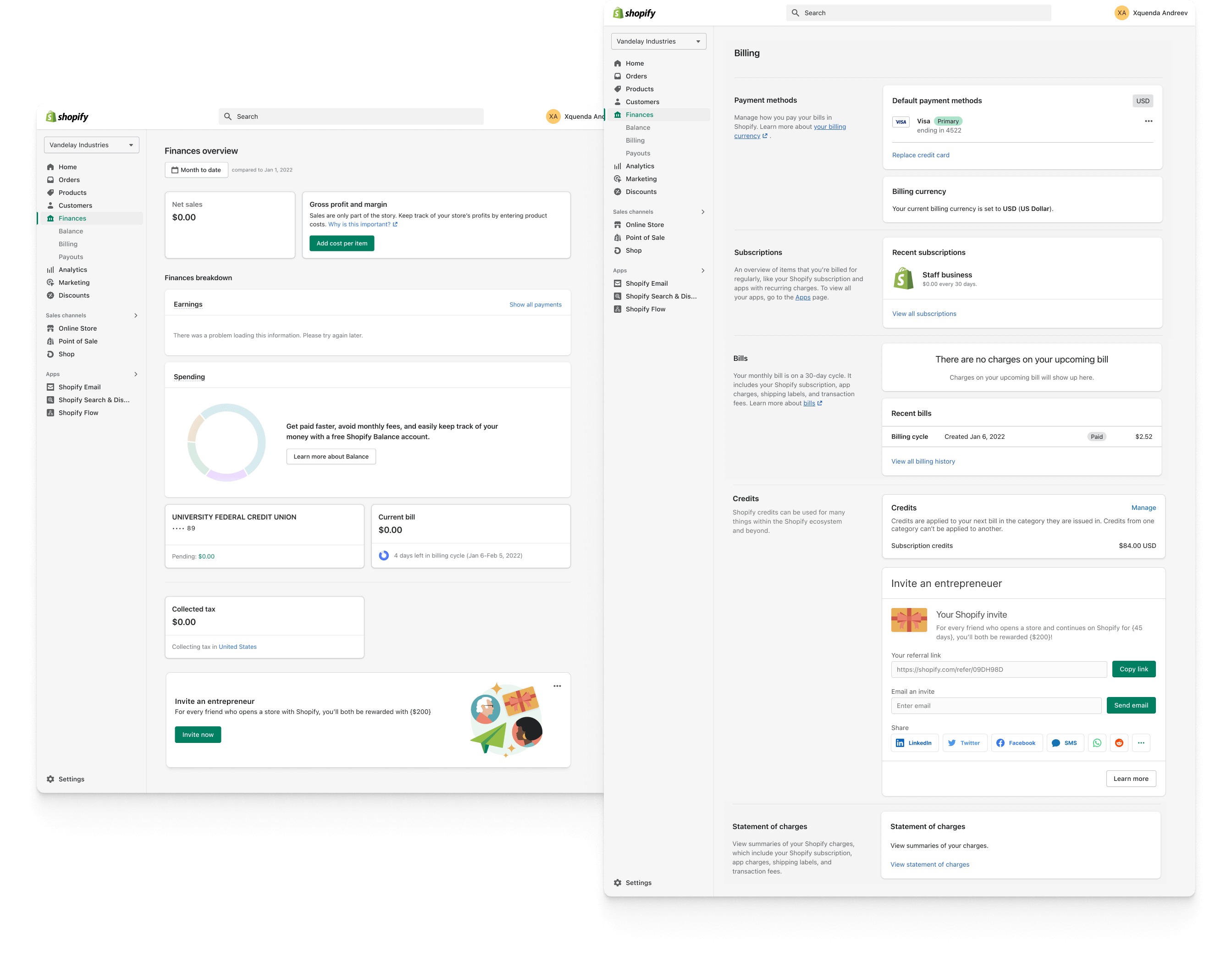
As a growth product, careful consideration must be given to its positioning within the overall user experience. It should enhance the core experience and avoid disrupting it. Initially, we considered integrating the program into the admin settings, but ultimately opted to leverage existing notification and messaging areas within the product. This allowed us to validate the program's position before making it a permanent fixture within settings. To surface the program to users, we explored various entry points such as the home dashboard, account dropdown, congratulations notification (for unlocking the storefront), billing email, login page, billing page, users & permissions section in settings, and search results.
Incentive variants
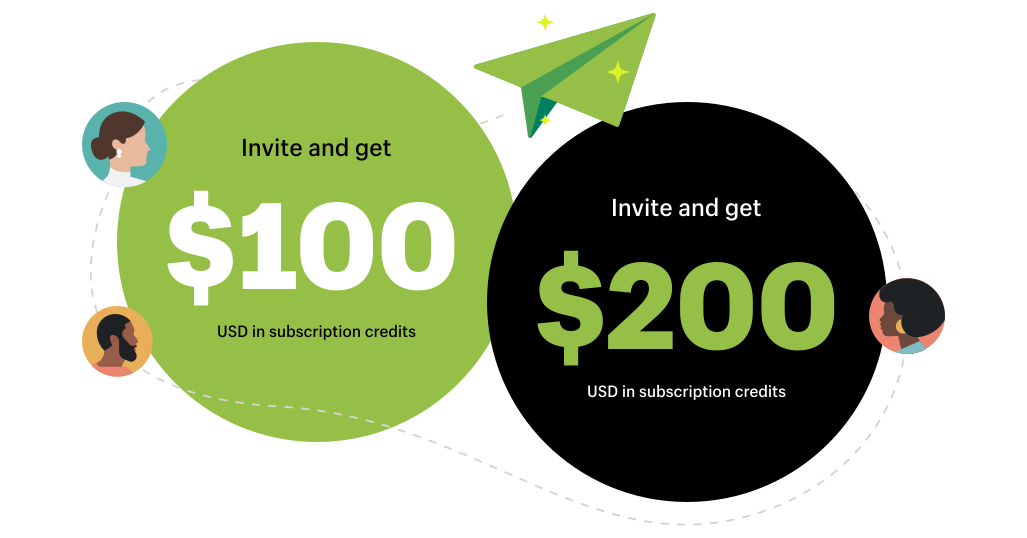
We conducted tests to determine which incentive variant generated more referral engagement, in addition to testing user interest in the program. Variant A offered a $200 reward for a referral, while variant B offered a $100 reward. We also planned to conduct tests with no incentives and higher incentive amounts. The variant assigned to a user remained the same throughout their engagement with the program, including within the product, landing pages, and emails.
Gauging user interest
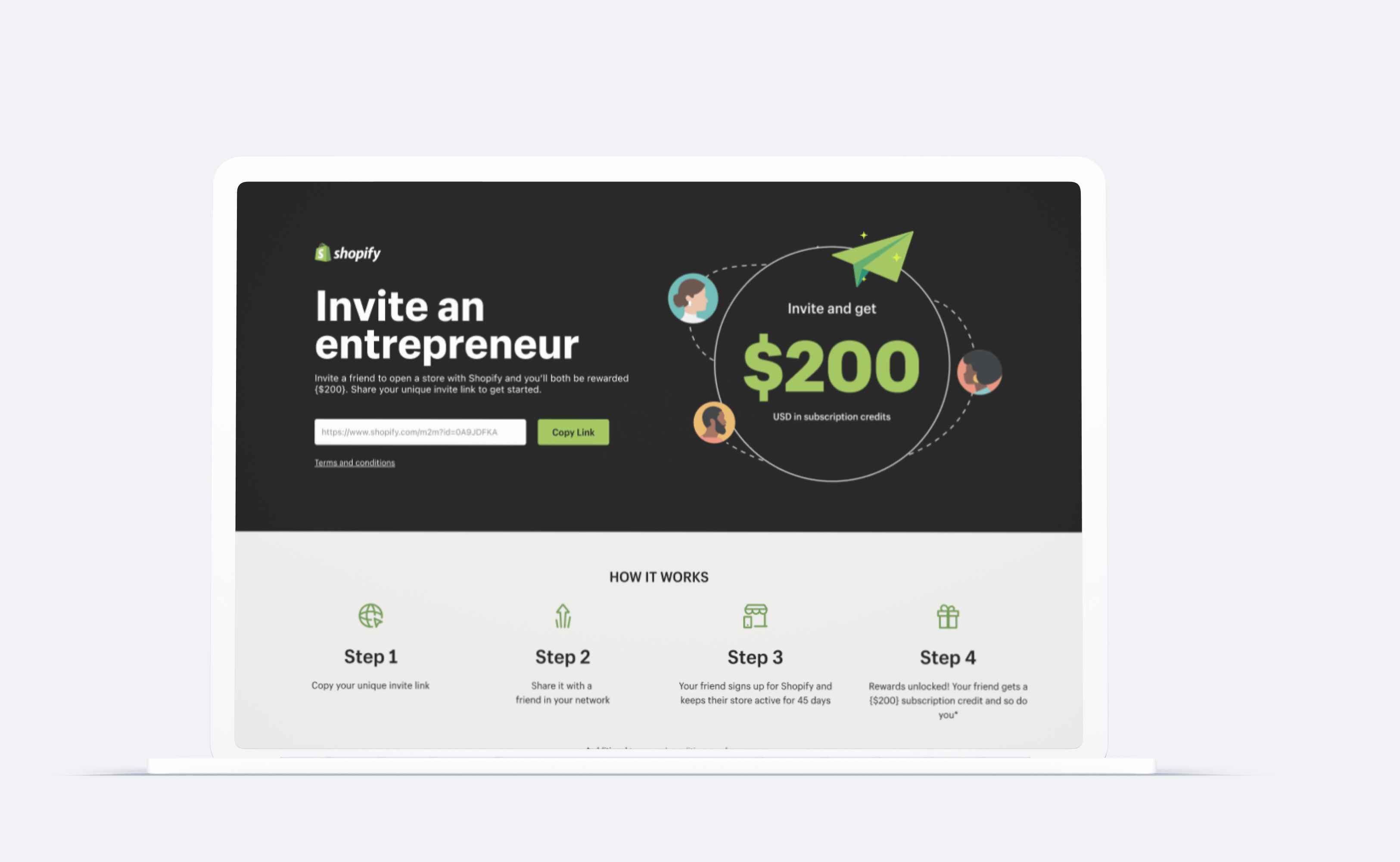
The primary objective of the project's first phase was to confirm the users' interest in a merchant referral program. Prior research had shown that users were already informally referring to Shopify, but there was no concrete data on the extent of this referral behavior. To keep development resources minimal, we designed a "scrappy" Phase 1 product that utilized existing areas within the product to showcase the program to users, as well as marketing landing pages for program details and referral link creation, and marketing and transaction emails to claim rewards. We aimed to track click-through rates for all entry points, as well as the number of referrals and signups.
Phase 2
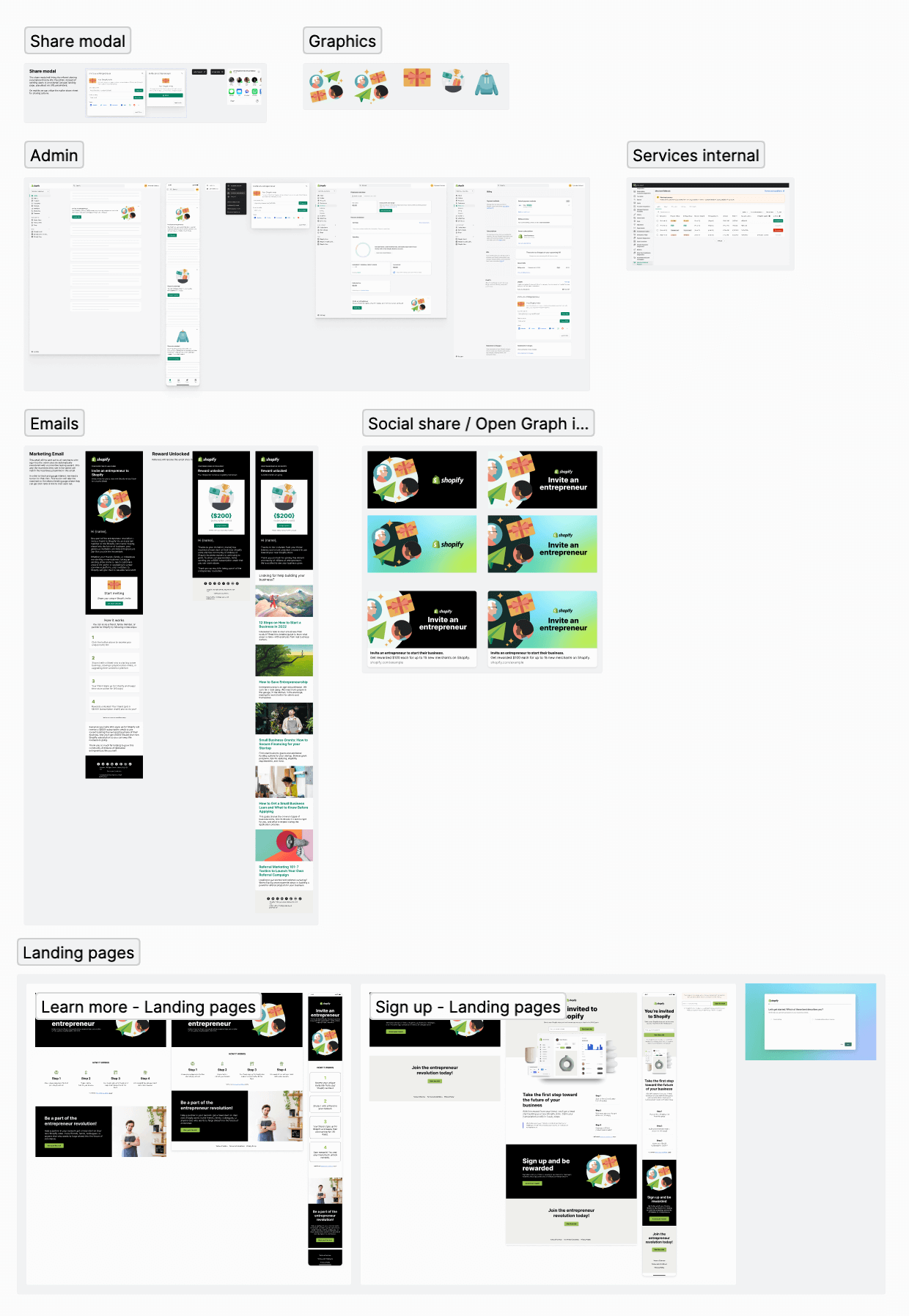
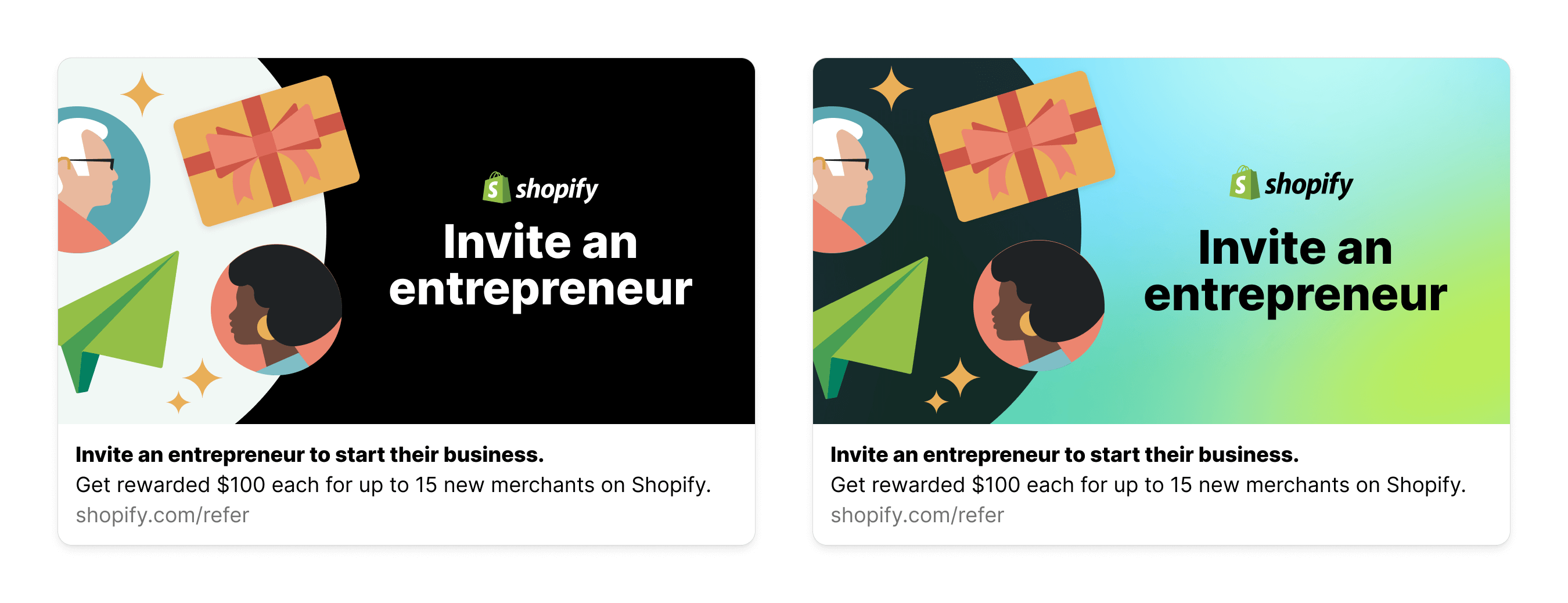
The second phase aimed to refine the user experience, add new features, and increase user engagement and conversion rates. The primary objective was to integrate the sharing experience (copying and sharing the referral link) into the native product and create an internal admin to manage referrals. Additional improvements were made to the marketing assets, graphics, landing pages, and messaging.
Share sheet
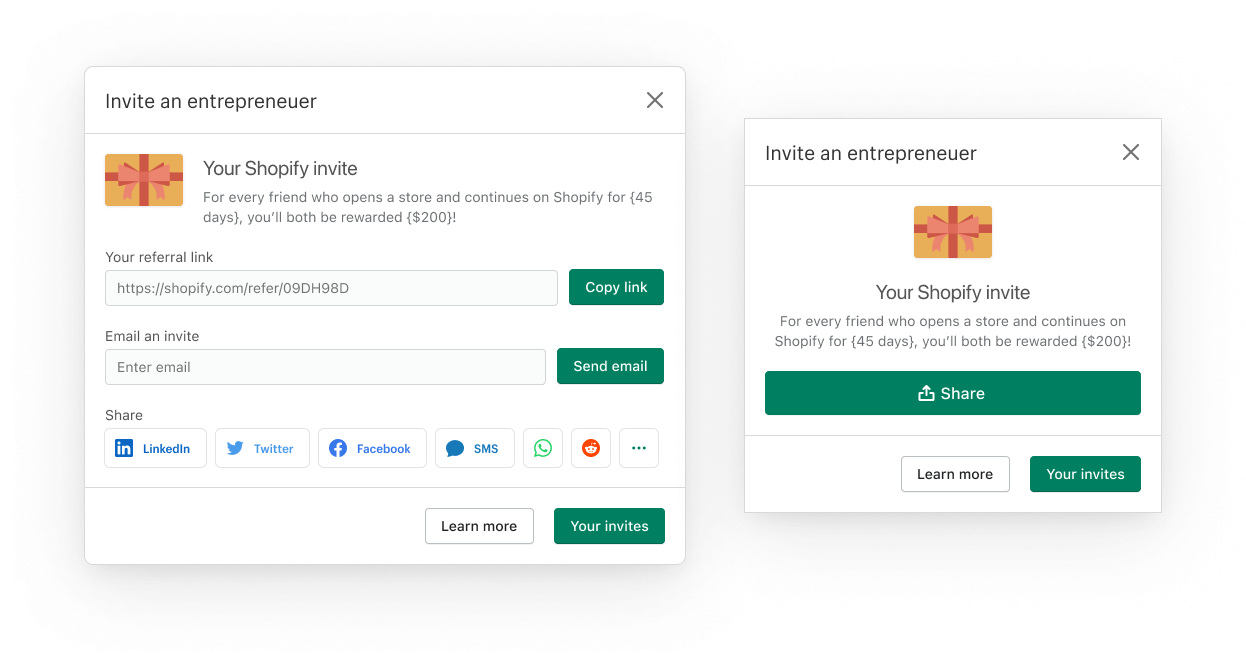
An important and notable improvement in phase 2 was the introduction of a share sheet or modal directly in the admin. Previously, to generate a merchant's unique referral link, a user was required to leave the admin and go to a landing page with URL parameters. Building the share modal into the admin (without needing an external landing page) makes it much easier to share a referral link and also keep users in the app. This is also a more efficient and adaptable way to build sharing into the app--any updates to sharing requirements can be managed from a single share modal that gets initiated from multiple sources across the admin.
Services Internal
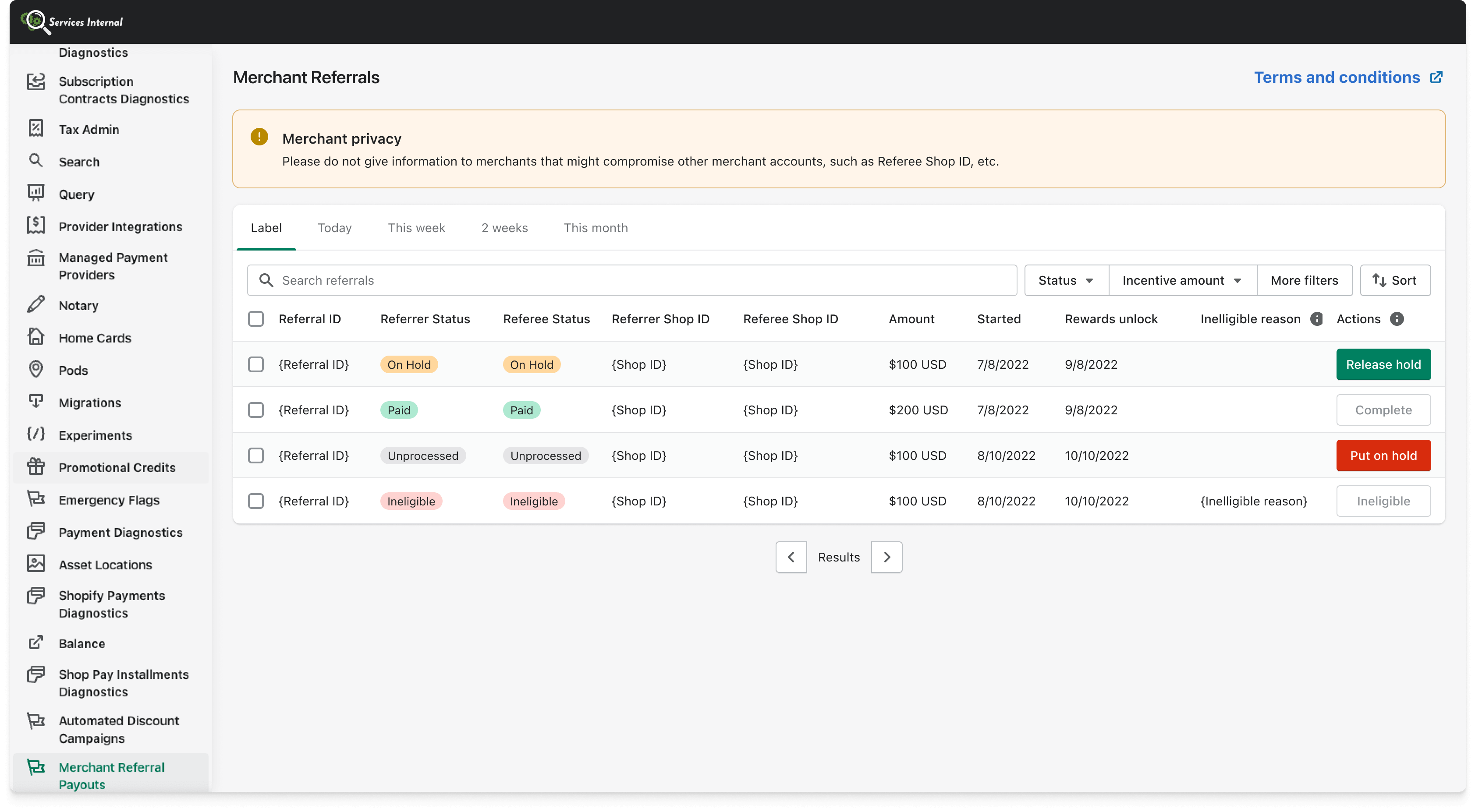
The initial experiment (phase 1) was conducted with several manual and time-consuming (and potentially error prone) tasks, like compiling email lists, tracking referred accounts, etc. This process could not be scaled well or efficiently. Once the program proved viable, referral actions were connected directly within Shopify's "Services Internal" user management app. Initial actions available for Shopify staff included putting a referral on hold, releasing a referral hold, and potentially marking a referral as complete or ineligible. The data displayed is intended to help Shopify support staff in addressing user concerns or questions about their referral behavior (or more likely referral credit).
North star
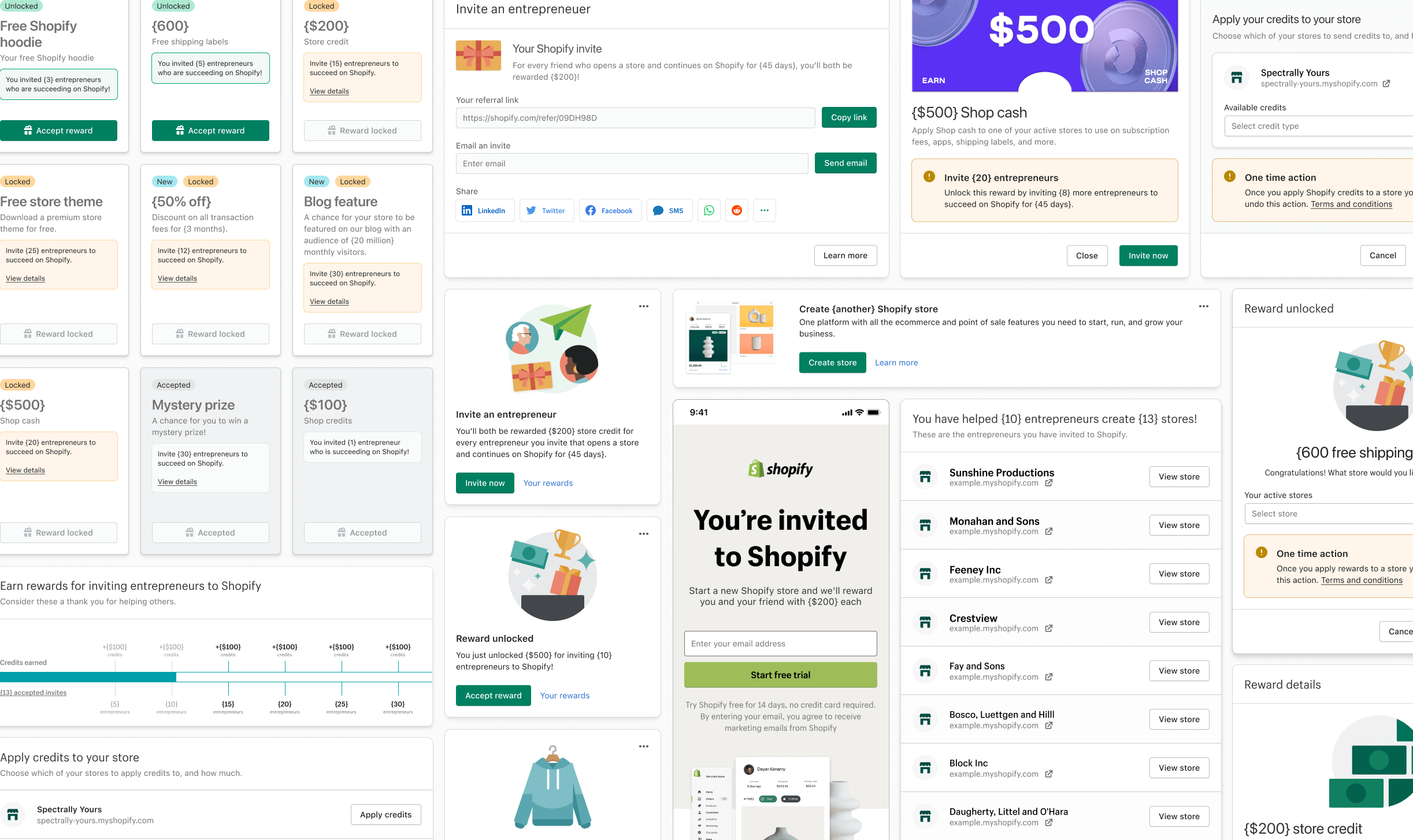
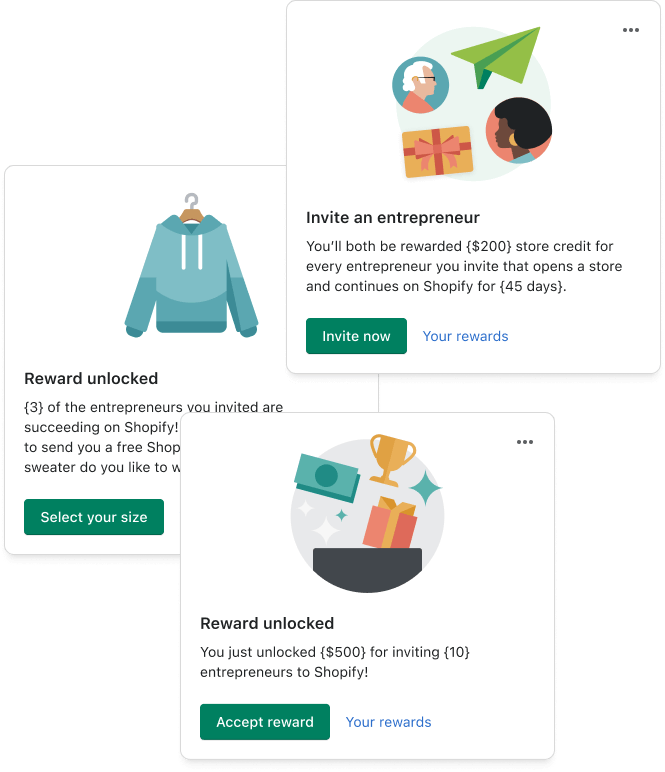
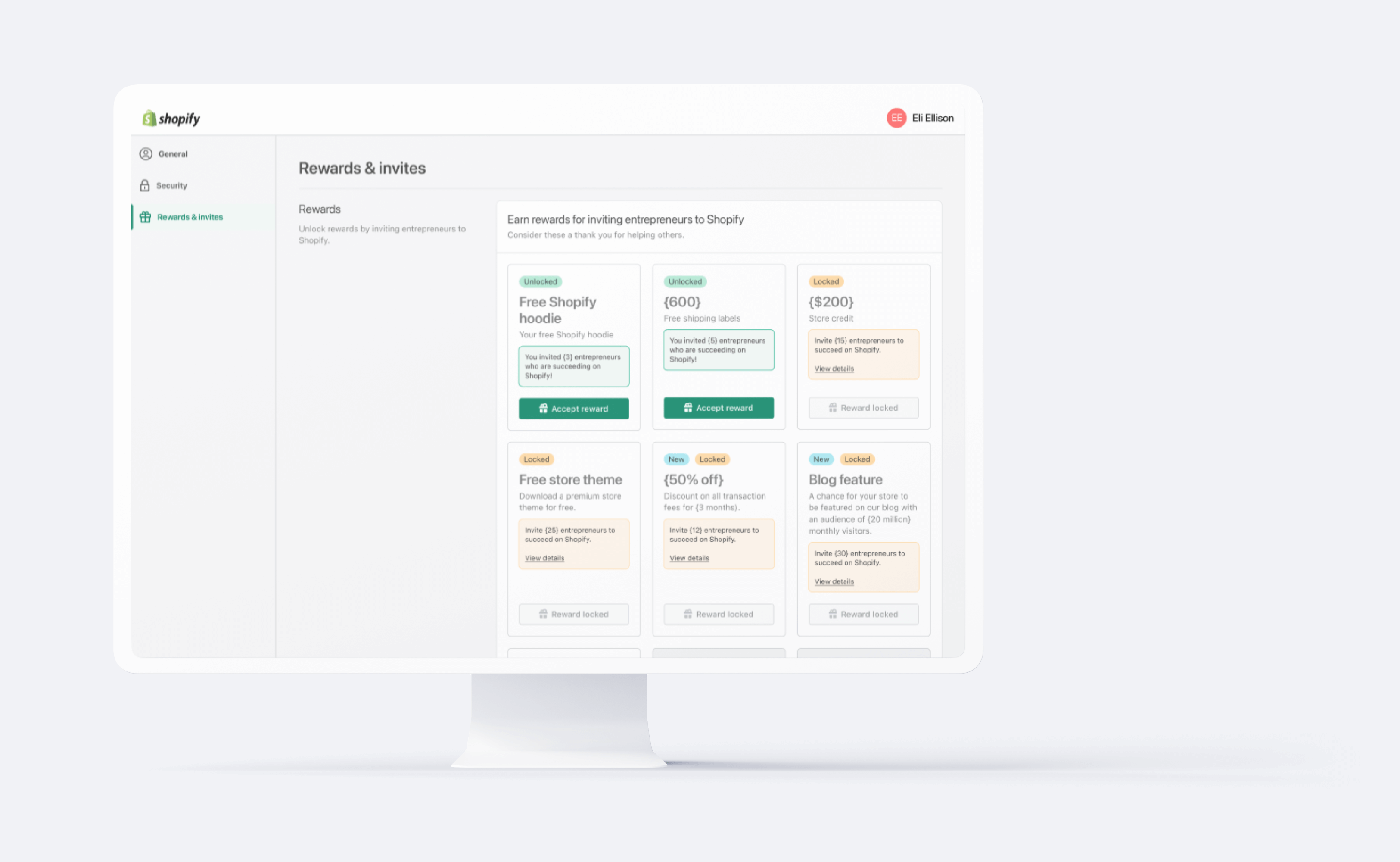
The north star of the merchant referral program explored the need for a centralized incentive platform. Referrals are a conceptual currency, with rewards changing from a store level to a user level. User level rewards meant creating a "Rewards and Invites" section, in the user settings. Users could unlock rewards based on the number of referrals completed. These rewards included various product marketing initiatives, such as offering shipping labels for onboarding users to that service, product gifts, blog features, plan discounts, subscription credits, and more.
100% release
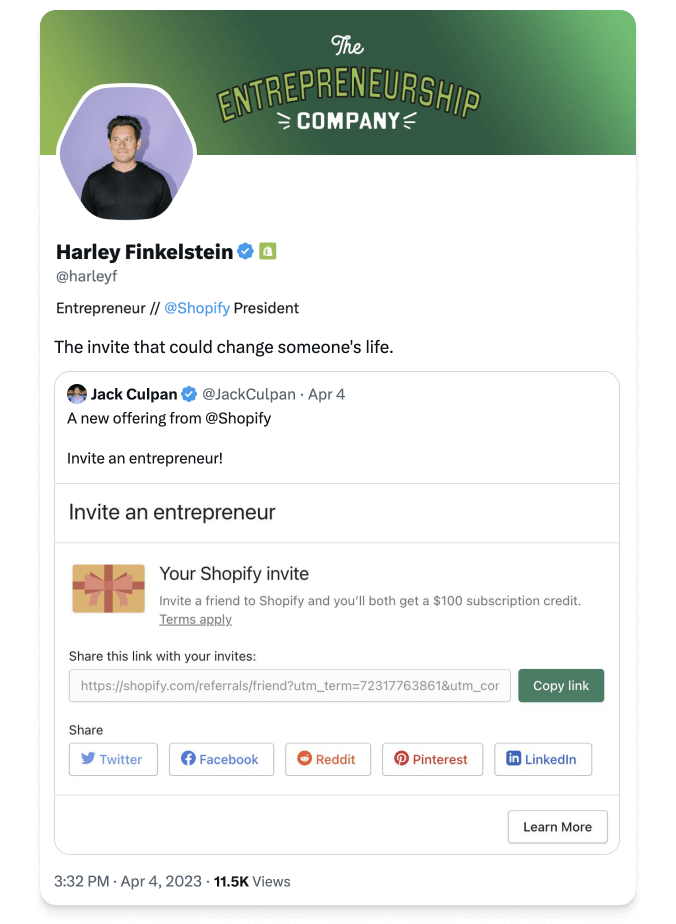
The merchant referral program has been successfully launched to all users on Shopify, and is an effective new growth lever. The user acquisition cost is considerably less (compared to paid ads) and users brought in through a referral are much more likely to stay on Shopify for longer periods of time. The merchant referral program proved to be a significant factor in growth performance on all key metrics and signup rates, surpassing goals and breaking company records!
Skills & competencies
Key areas of expertise and methodologies applied during this project.